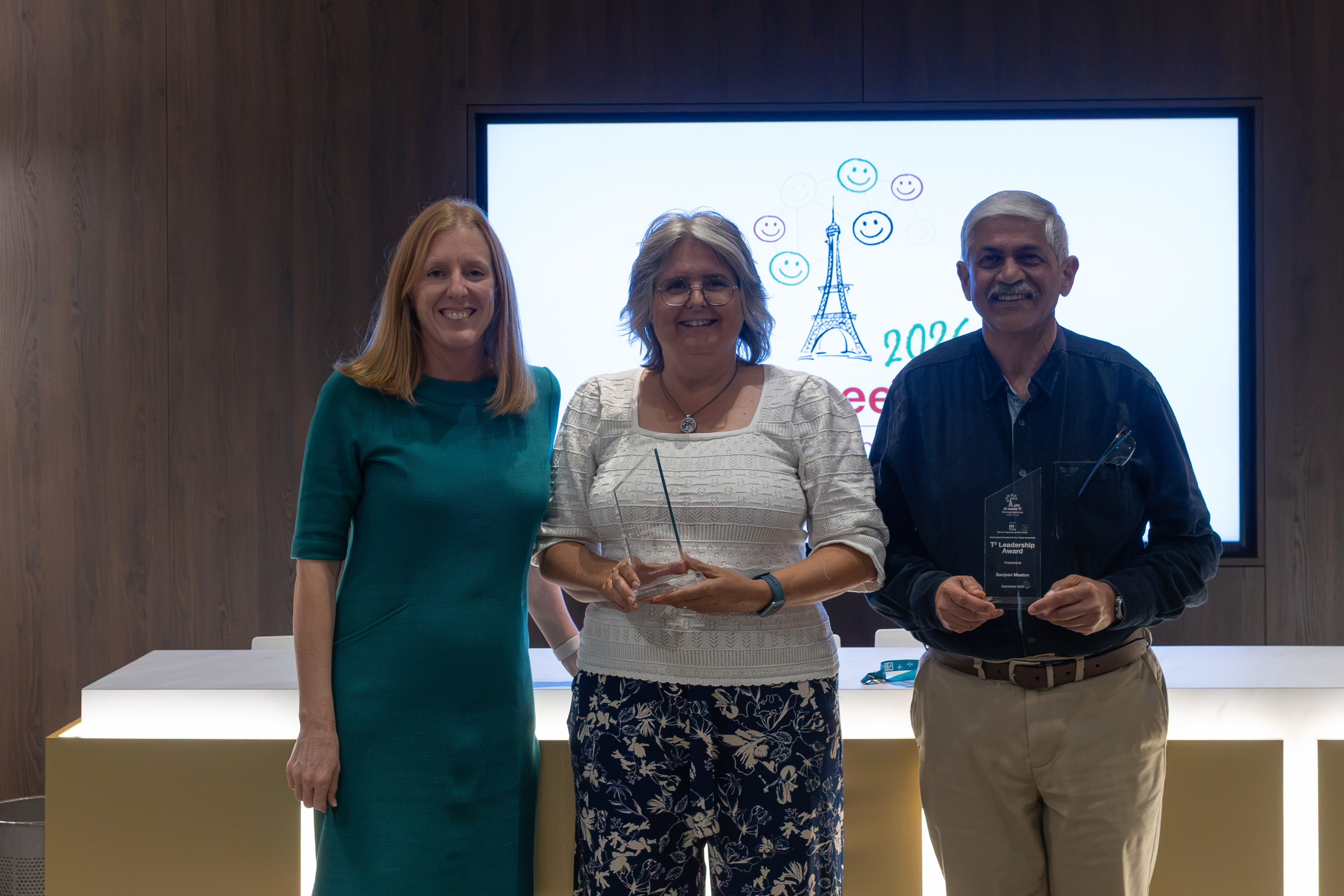
Sharing Inspiration 2026: Where Teachers Unlocked the Power of AI

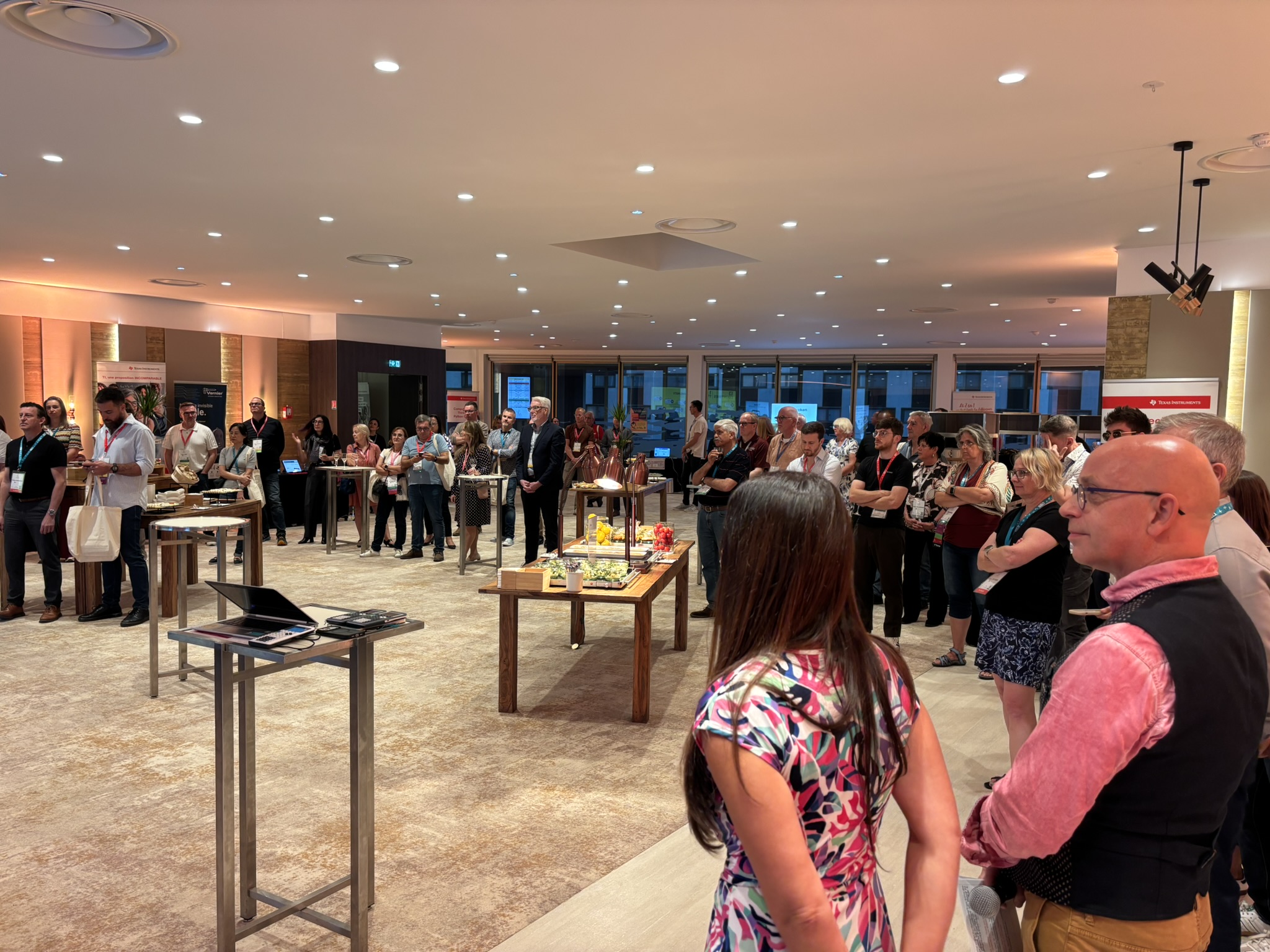
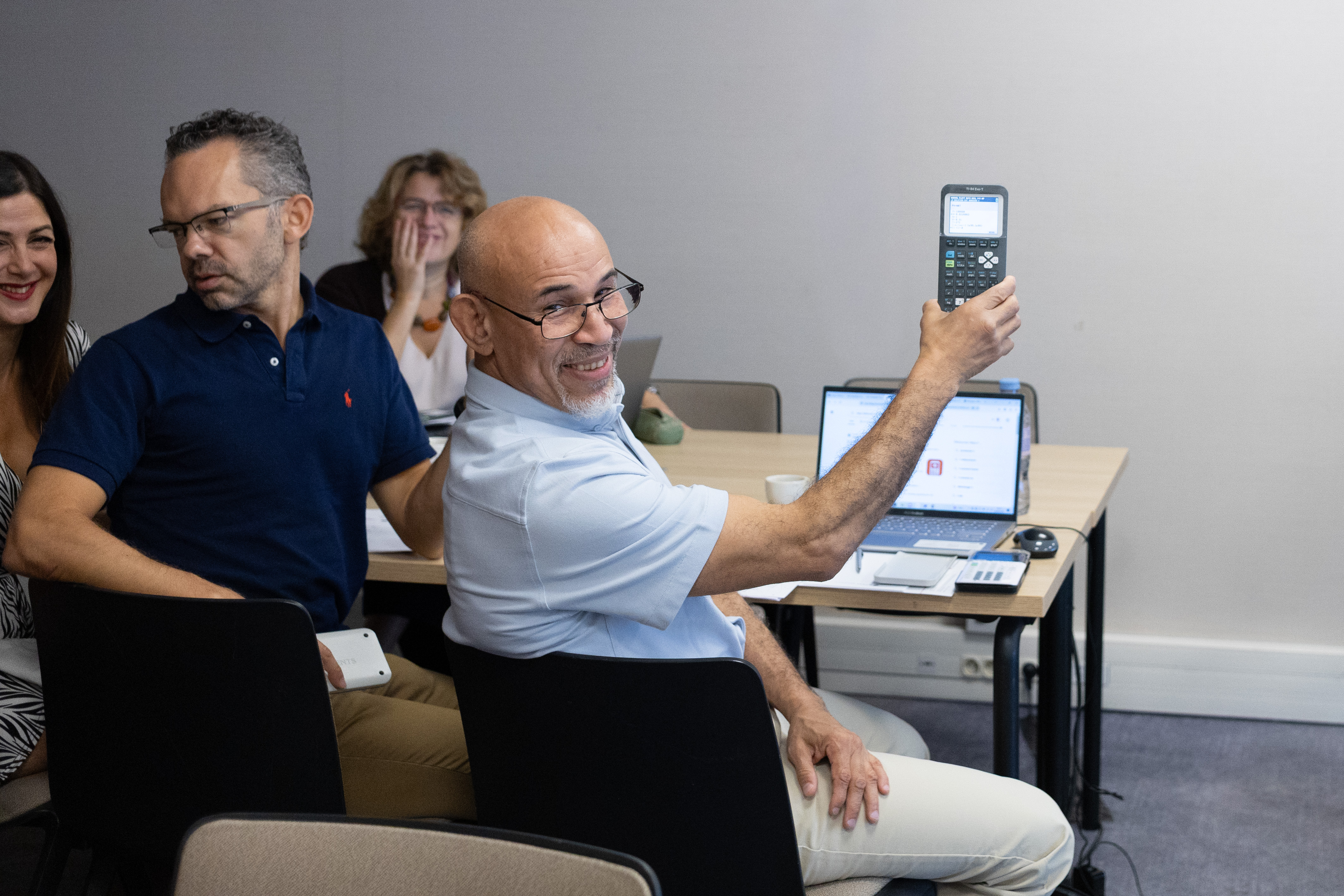
What does the future of teaching look like in the age of Artificial Intelligence? In September, 55 T³ instructors from 15 different countries gathered to share ideas and practical examples related to this rapidly evolving field. In a gallery walk, workshops, and sessions at this Paris conference, teachers shared how they combine TI technology and AI in the classroom. One teacher summed up the value of the event perfectly: “Let’s be like an AI tool, work faster and smarter, and learn from each other.”
In his welcome speech, TI’s Alexandre Titin-Snaider invited all participants to freely discuss the pros and cons of the rise of AI in the day-to-day teacher journey. He said education is at a critical juncture. “This past June, some of the world’s leading mathematicians and philosophers published a formal Declaration on AI and Mathematics. Signed by thousands of researchers worldwide, they warned that AI can produce ‘plausible-but-unreliable’ math. Their solution? Humans must stay accountable for correctness. We must insist on verification, not just automation.”
A speedy embrace of AI is essential
A major concern for many of the teachers attending the two-day conference is how to deal with AI without clear guidance from policymakers. Education Consultant David Leigh-Lancaster highlighted this key challenge and spoke about a velocity gap. “Curriculum cycles move at the speed of years. How current can a curriculum remain when the world it serves is changing faster than the review processes designed to maintain it?” But doing nothing is not an option, stressed Hans-Martin Hilbig, T³ instructor and retired engineer. “It is essential that teachers embrace AI because students will, and they will pass you if you don’t.”

Inspiring activities with AI
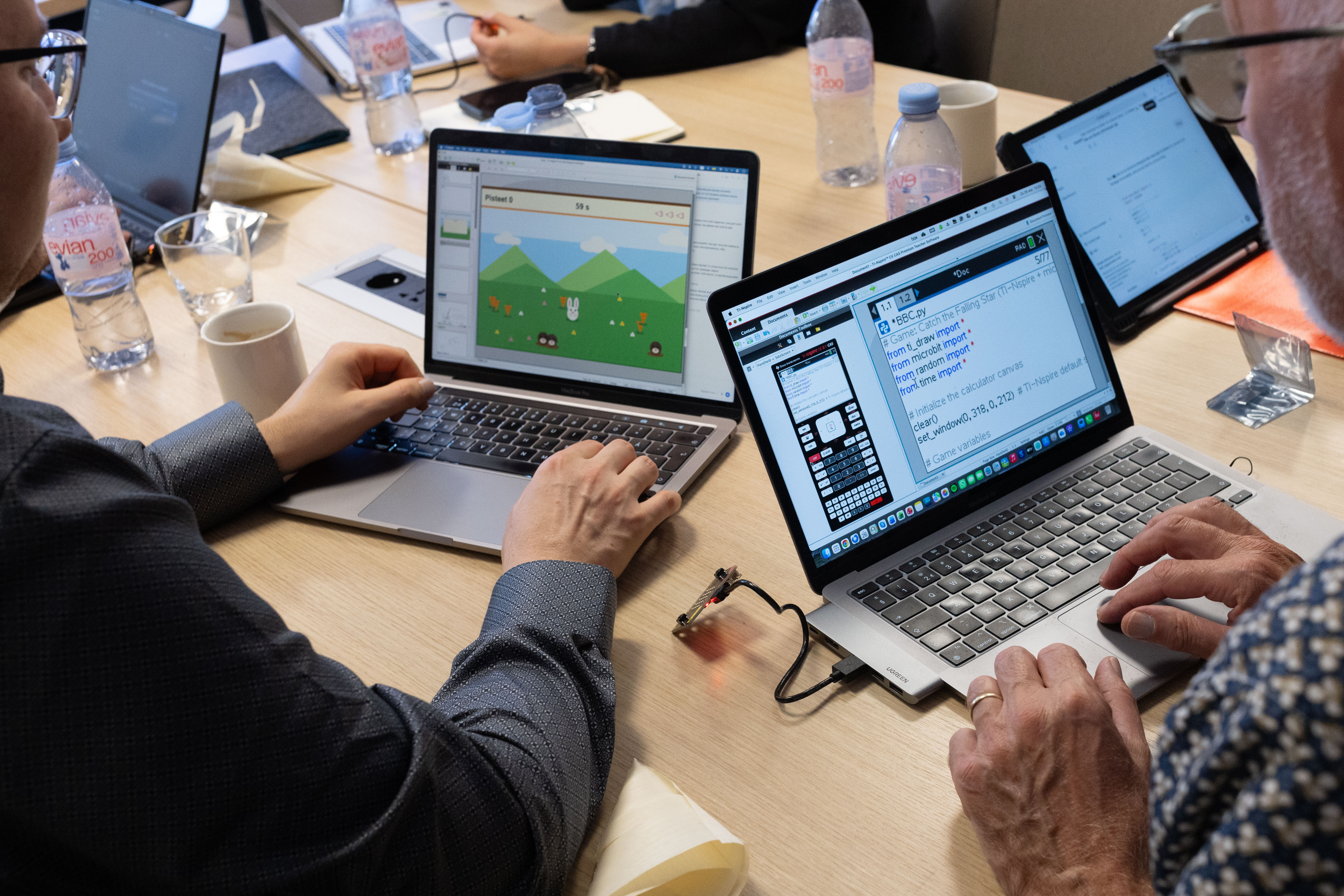
Many teachers have already brought AI into their classrooms, as shown by the creative activities shared during Sharing Inspiration. Like Australian James Mott, leading teacher at the Centre for Higher Education Studies (CHES), where teachers use AI to complement TI-Nspire™ CX technology in the classroom. “We are constantly thinking about how we can use AI to engage students in deeper thinking,” he said. The same is true for French teacher Boris Hanus, who created lesson activities focused on reinforcement learning. In his opinion: “We have to use AI and make good use of it.”
Endless opportunities for meaningful learning
Sebastian Rauh, T³ instructor in Germany agreed. “Many students think math is a dry subject and kind of boring. With AI you can generate meaningful learning.” This was demonstrated by several teachers, like Portuguese T³ instructor Alexandre Gomes, who used drones, robots, and AI to fight wildfires. “With AI we are teaching machines to see. Hands-on projects like these encourage students to explore and learn by doing.” This is exactly how Alexandre Titin-Snaider believes AI tools should be used. “If AI does all the hard work, students will not learn as much. But if we use technology as a scaffold — to model, to reason, and to interpret — they thrive.”
Roadmap for AI usage
For two days, Laura Chambers, President of Texas Instruments Education Technology, immersed herself in the discussions. “I noted how perfectly the title of this conference ‘AI Meets TI: New Competencies for a New Era’ captured the moment. It was spot‑on, because it reflects the rapid shift education is facing right now and the new skills teachers and students need to move confidently into the future. I saw some great examples of how AI can be effectively used in the classroom along with TI education technology. For instance, the developments in Singapore as pointed out by Mathematics teacher Yew Fook Chan show us a very nice roadmap for AI usage.”
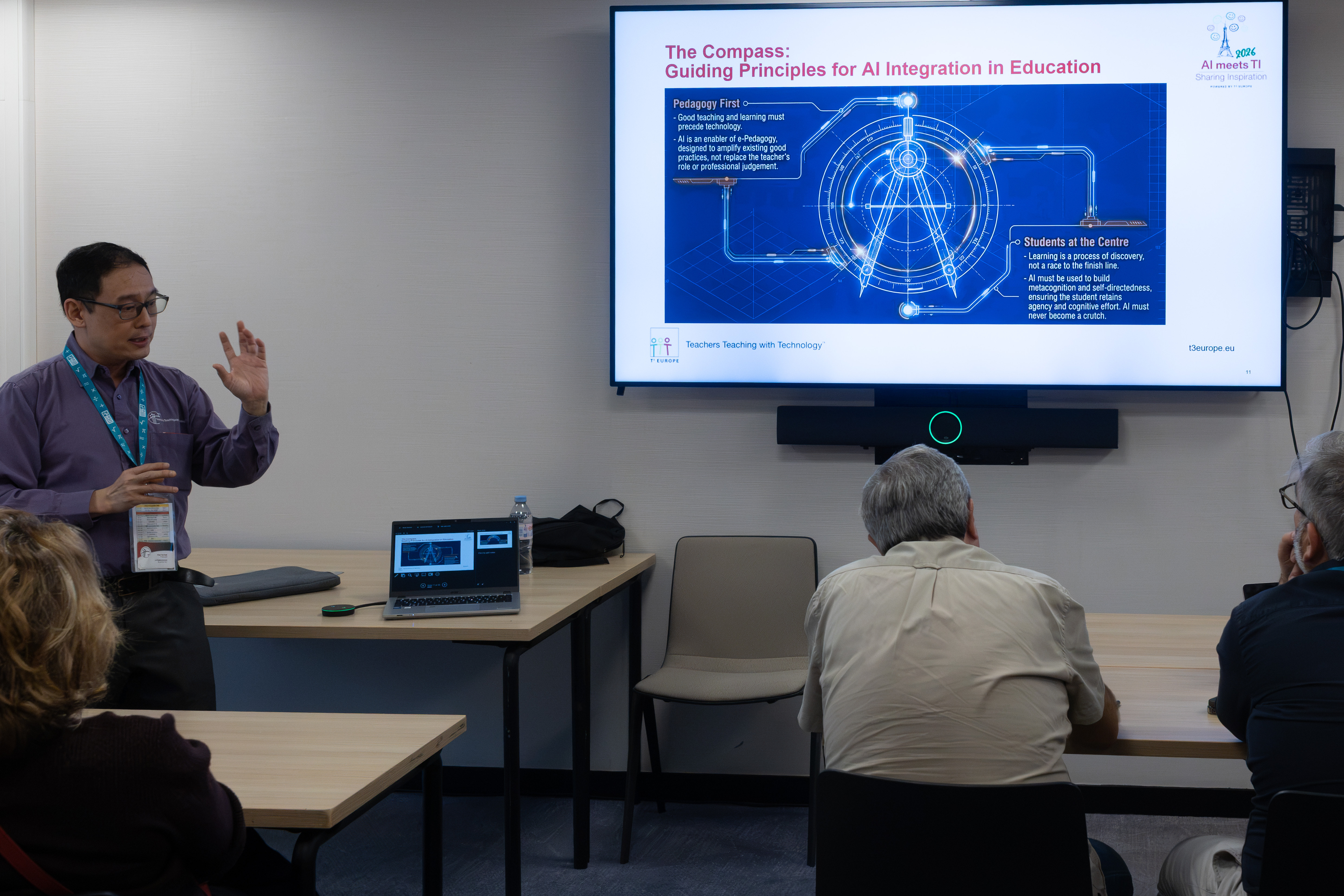
This teacher from St. Joseph’s Institution in Singapore shared how generative AI is fully embedded in the curriculum. “In 2025, we integrated AI tools in learning, teaching, and grading,” said Yew Fook Chan. “Students use AI to brainstorm and have to show us how they used the outcomes.” The teacher emphasized that AI is seen as a collaborative tool, while pedagogy remains the priority. “First and foremost, educating students is to spend time with them. We are still developing, but one thing is clear: The human connection in teaching and learning is central.”
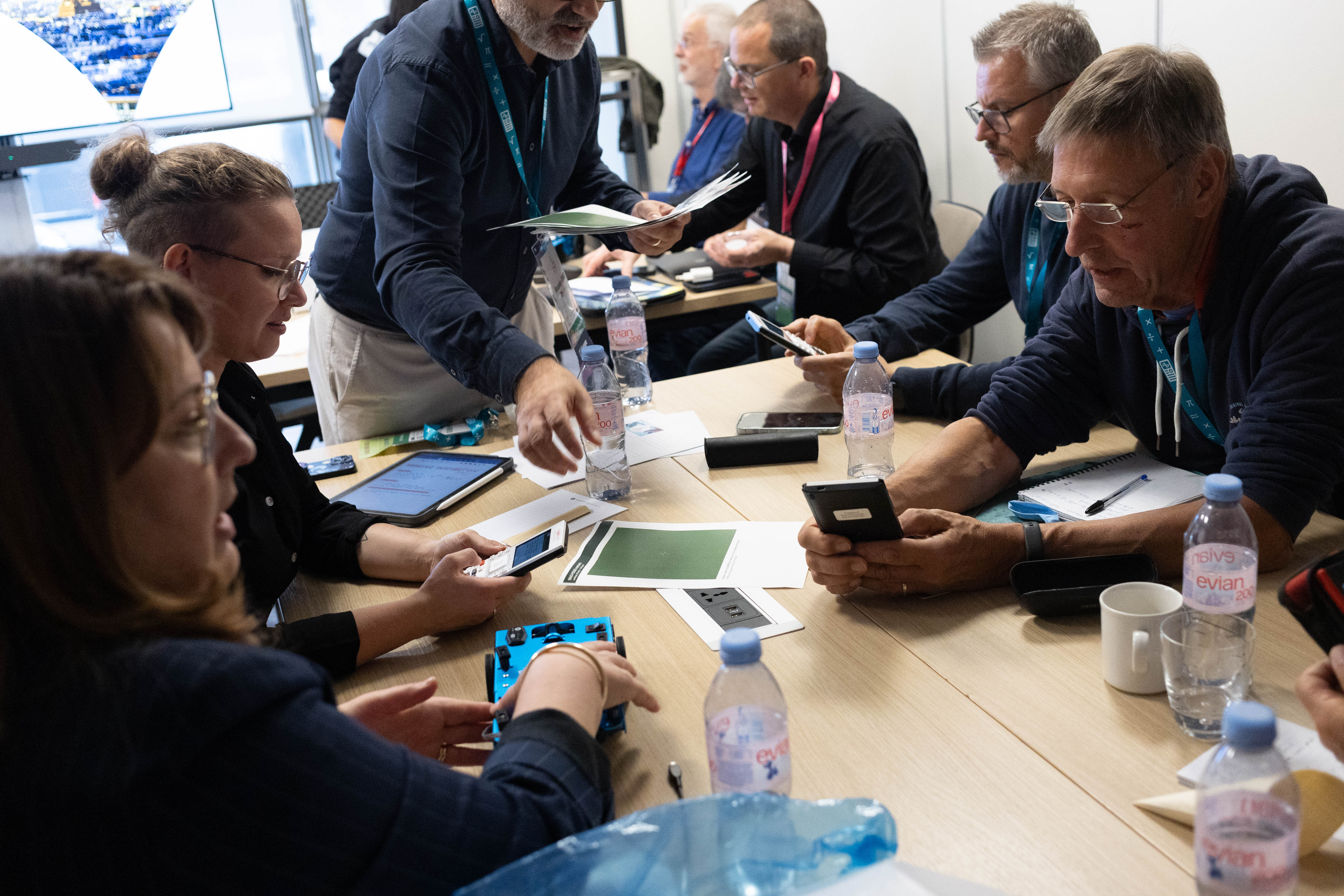
Teaching is about making connections
Not every school can rely on a government-led initiative like this. So, what can you do as a teacher? According to Hans-Martin Hilbig everybody is an AI user in daily life, “So why would you just use pen and paper in the classroom? I would advise teachers to go for a bottom-up approach and ask yourself, ‘How can I use AI to make a change?’” TI’s Dale Philbrick also weighed in on the discussion. “AI is changing the classroom, that is a fact. At Texas Instruments, we remain focused on designing technology that supports deep math learning, free from distractions and algorithms. As part of that commitment, we will share insights on AI in education. We always keep one thing in mind: Teaching is about making connections. And connections last. Let’s keep in touch!”
More- Want to explore more? Read our blog “Bringing AI Into the Classroom: 4 Ideas With TI Technology,” for additional examples and inspiration from the conference.