
Bringing AI Into the Classroom: 4 Ideas With TI Technology

You can start simple with an AI tool that acts as your personal lesson planner. Or go all in and develop an interactive app that uses TI‑Nspire™ technology to bring an escape room into your classroom. During the Sharing Inspiration conference in September 2026, members of the T³ teacher community demonstrated how they are using AI to enhance learning. Discover these four inspiring ideas and explore new ways to bring AI into your own teaching.
Read about the concrete examples in detail:
- AI assistant for better teaching
- AI-powered wildfire detection with robotic vehicle
- Challenge your students with an AI‑powered TI‑Nspire™ virtual escape room
- Complementary use of TI‑Nspire™ CX CAS technology and AI
1. AI assistant for better teaching
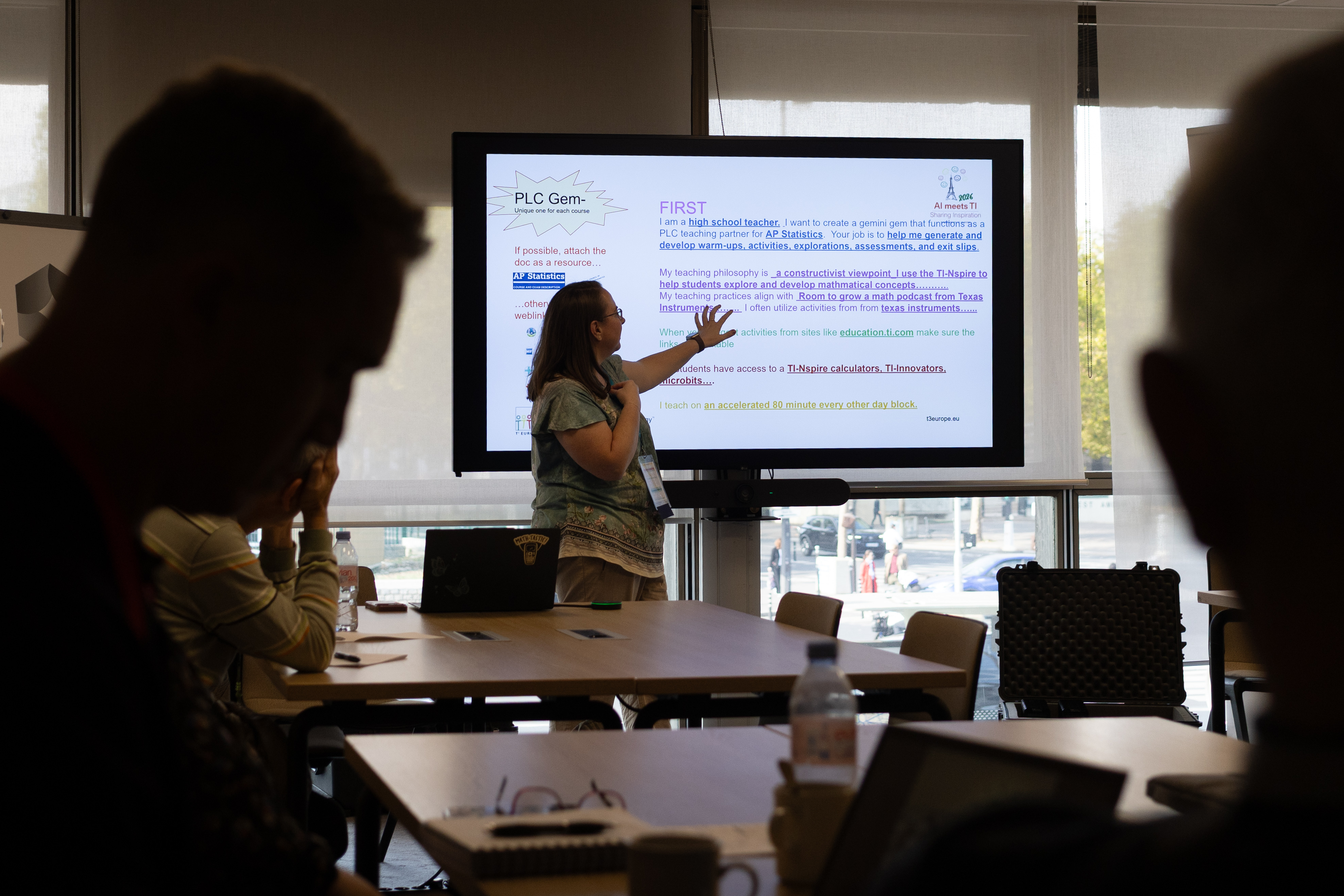
“AI has made me a better teacher,” said math and computer science teacher Becky Byer at the start of her workshop at the Paris conference. For each course she teaches at Kelly Walsh High School in Wyoming, she works with a Gem. This AI assistant (or chatbot) in Google Gemini™ is her personal helper. “Instead of asking a general AI to do everything, you create a Gem that is trained to help with one specific job,” she explained. “I, for instance, enter learning objectives, curriculum requirements, documentation on TI technology, and personal preferences. My Gem is helping me with very nice creative ideas on lesson planning, quiz questions, explaining concepts, or giving feedback. It’s like brainstorming with a very informed colleague.”
2. AI-powered wildfire detection with robotic vehicle
Wildfires are a growing global problem threatening forests, wildlife, and communities. Early detection can make a huge difference. To address this problem, Portuguese teachers Alexandre Gomes and Joana Duarte equipped a TI-Innovator™ Rover with a colour sensor and a machine learning model to function as a fire detector.
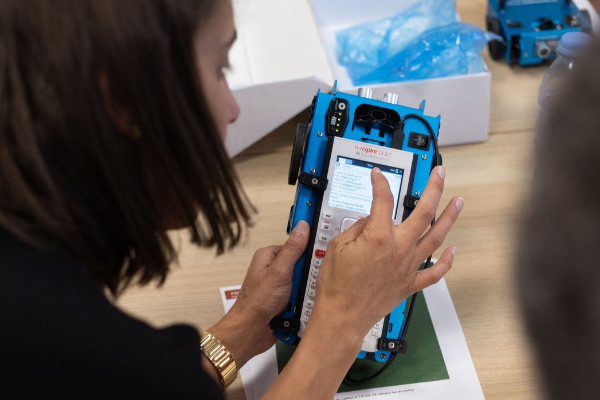
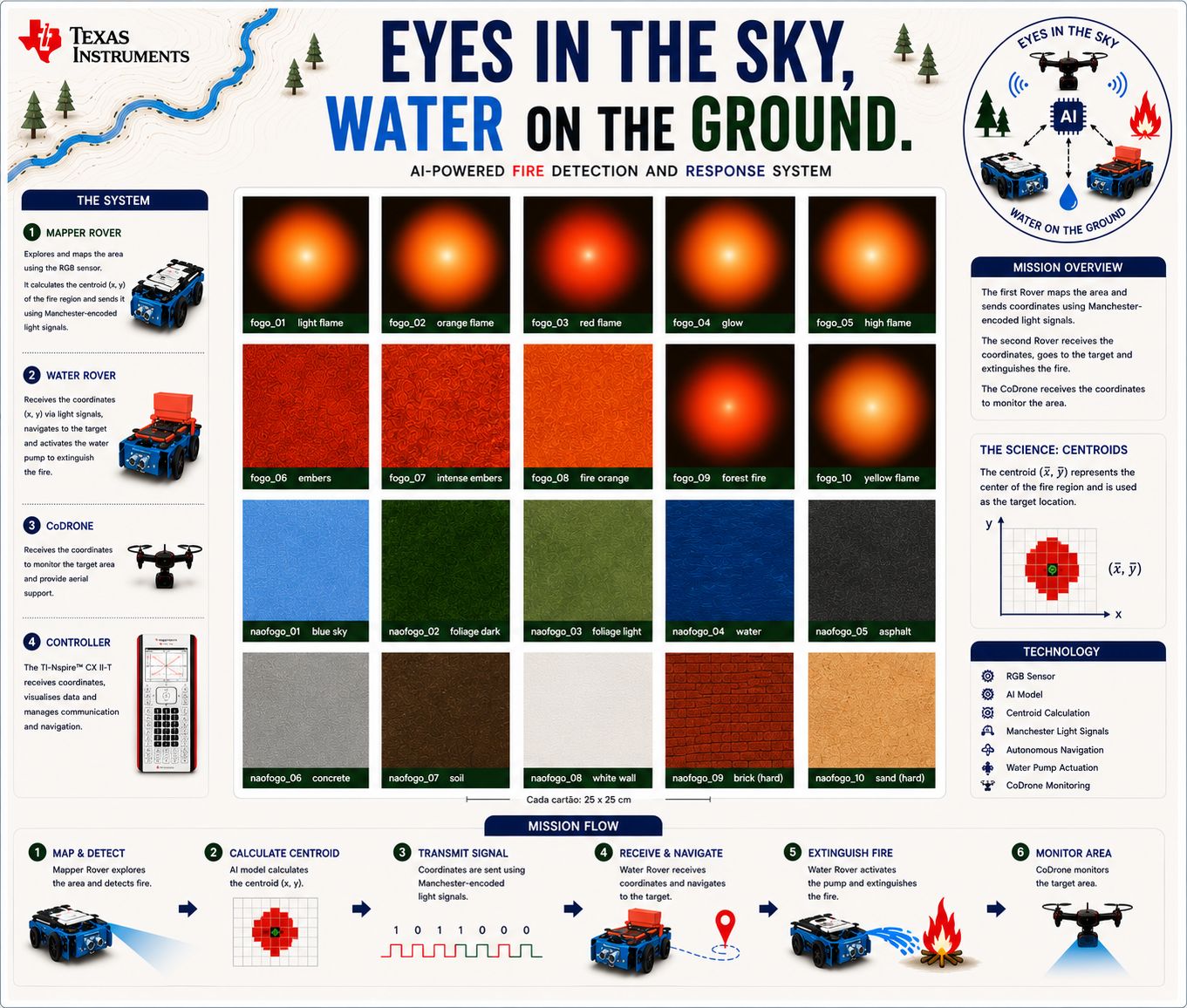
They printed a large floor mat featuring images of fire hazards and non-fire situations. Alexandre said, “We drive a Rover over this floor mat to look for fires. If a fire is detected, it sends a signal to another Rover equipped with a firefighting system. That Rover drives to the location and extinguishes the fire by spraying water on it.”
This project is based on machine learning, binary coding, and Python programming. “We deliberately kept the model simple,” said Alexandre. “It reads RGB values from images and is trained to distinguish between two classes: fire and non-fire. When the system encounters a new situation, it compares the measurement against the two classes. If it’s closer to ‘fire’, it’s classified as fire; otherwise, non-fire. When fire is detected, the first device alerts the second one by blinking a light in binary code, effectively transmitting the coordinates of the fire’s location.” The project named “Eyes in the Sky, Water on the Ground” is still being developed and will be expanded to include a drone, among other features.
3. Challenge your students with an AI‑powered TI‑Nspire™ virtual escape room
German T³ instructor Sebastian Rauh likes to use AI to generate meaningful learning. “You can create a story at the beginning of a semester and work with a chapter per lesson. Then you have a final showdown at the end. If possible, put actual events in your story, maybe even from the local news, like a tree that fell. This will keep students involved and excited to learn.”
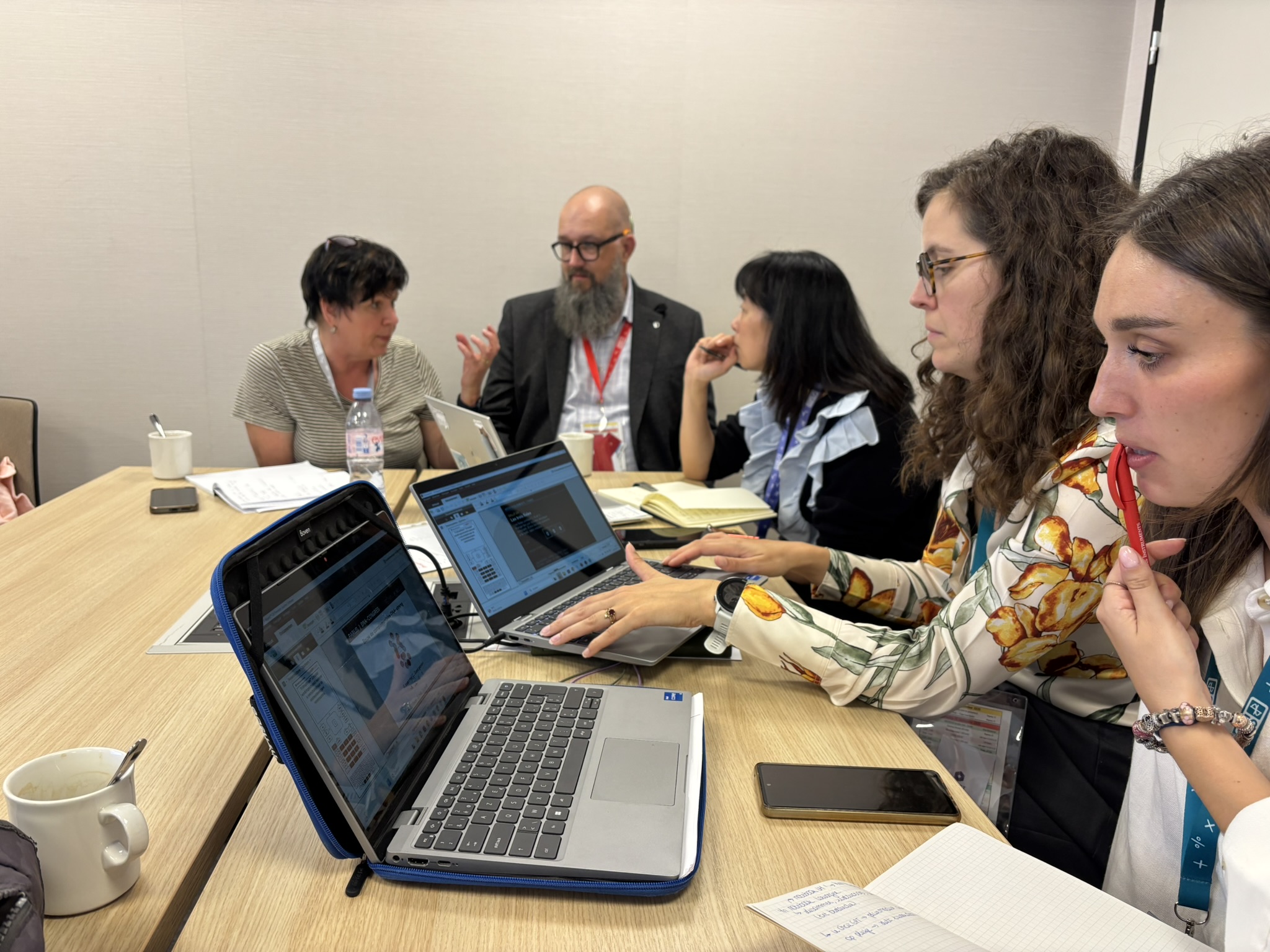
Here are the steps to build your virtual escape room:
- Use an AI tool such as ChatGPT to create a quiz. Give the AI a topic and let it generate challenges that students must solve to eventually escape the room.
- Use the AI tool to write the code for a LUA app. LUA is a free open-source scripting language. You can script math and science activities and simulations and insert them in free, downloadable TI-Nspire™ Documents (.tns). You can develop custom applications that function like a TI-Nspire™ built-in app.
- Your escape room is now ready for the classroom. Students can complete the challenges on their iPad®, laptop, or graphing calculator.
What stands out is how quickly you can create a challenging classroom activity. Using Rauh’s example, a chemistry teacher created the basis for a functioning escape room on chemical elements in just one hour. “It just requires some more tweaking and we are ready to go!” she said.
4. Complementary use of TI‑Nspire™ CX CAS technology and AI
Several schools in Australia have integrated AI into classroom activities alongside TI‑Nspire™ CX CAS technology. James Mott, leading teacher at the Centre for Higher Education Studies (CHES) explained: “At our school, students use TI‑Nspire™ CX CAS technology as their primary environment for learning and doing mathematics. It provides the appropriate representations, helps validate their results, and is a highly versatile environment for coding. We also allow the use of AI, as we have found that it helps students make sense of information. To them, it feels like having an extra student in the room who’s always available for questions.”
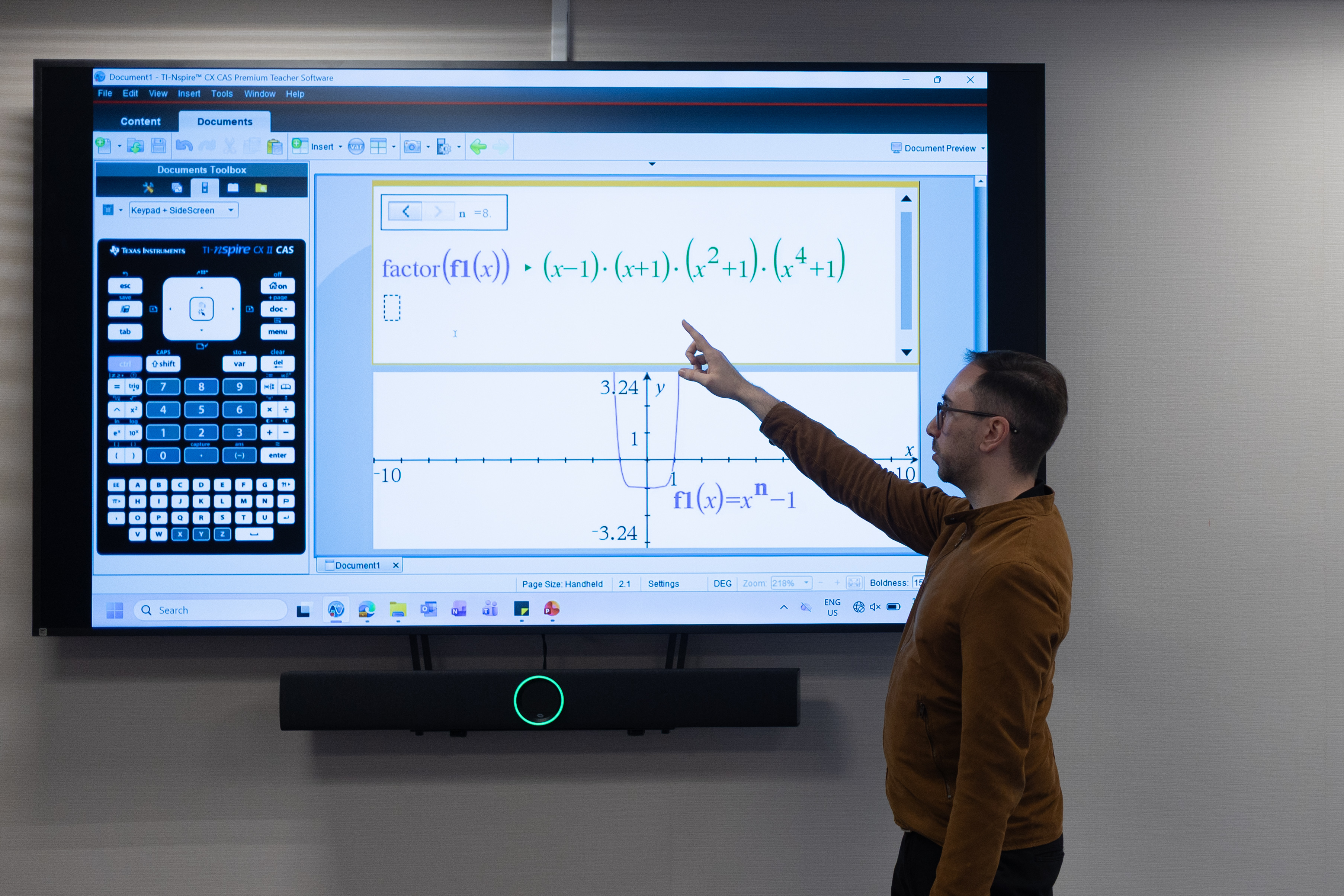
Teacher Angel Wong added, “Every teacher will recognize this: There is never enough time to cover all the mathematics you would like to explore in class. By using AI, students can spend less time on routine tasks and more time engaging in rich mathematical thinking.” They apply this approach, for example, when teaching the Sierpiński triangle. “Students often find programming challenging. So they use AI to write code for Euler, helping them understand step by step how the Sierpiński triangle is created. They ask AI whether their code is correct, but when it turns out not to be, they still have to investigate and solve the problem themselves. That struggle is an important part of the learning process.”
More- Want to explore more AI inspiration from T³ educators? Read our full conference recap: “Sharing Inspiration 2026: Where Teachers Unlocked the Power of AI.”
Gemini™ is a trademark of Google LLC. iPad is a trademark of Apple Inc., registered in the U.S. and other countries.